
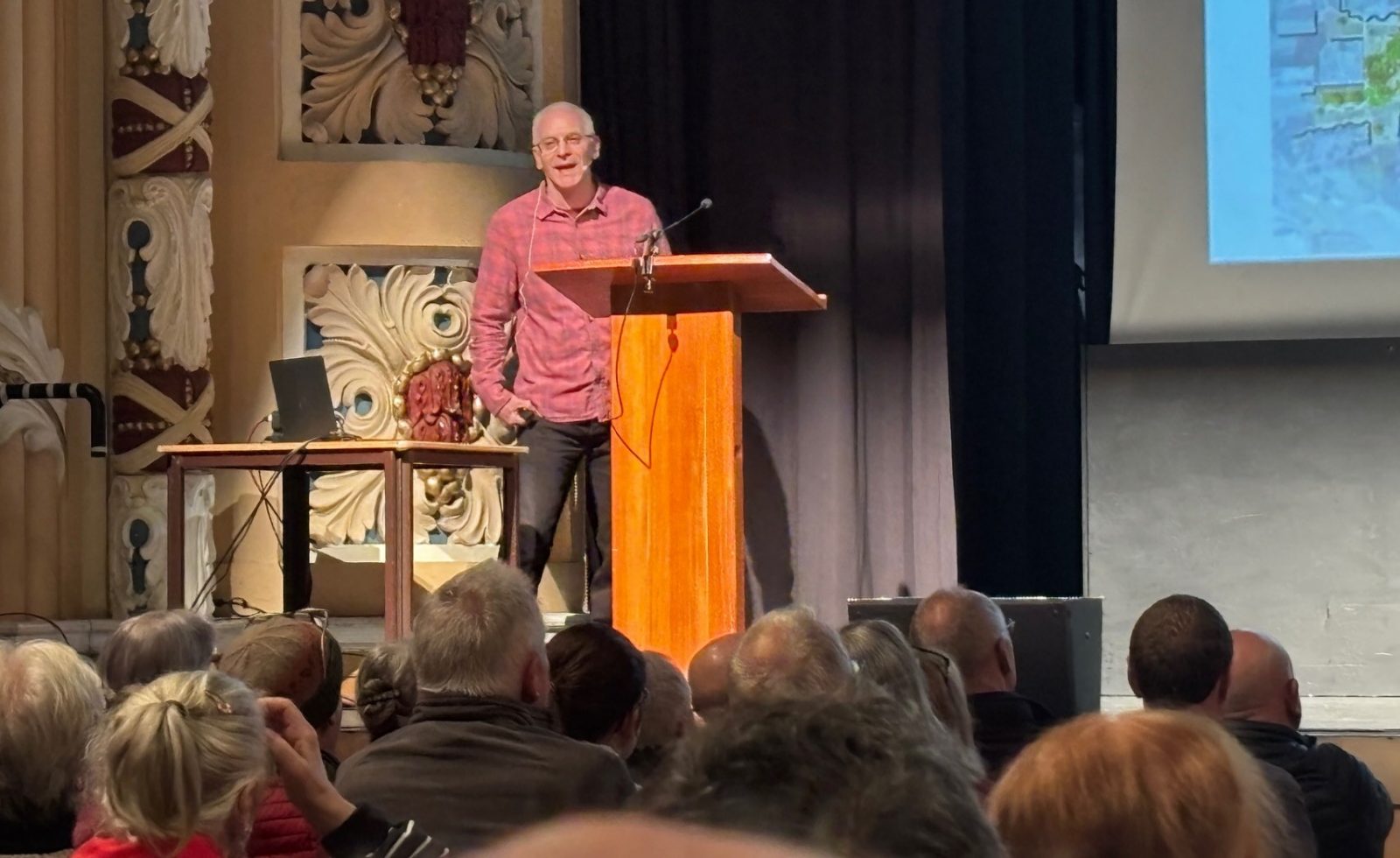
Chesterfield Archaeology day, on Saturday 31 January 2026, included a presentation from John Thomas of the University of Leicester Archaeological Services about the recent (and still ongoing) excavations at Rykneld Square, near Chesterfield Parish Church. We thought it might be useful to give a quick update on what was discussed.
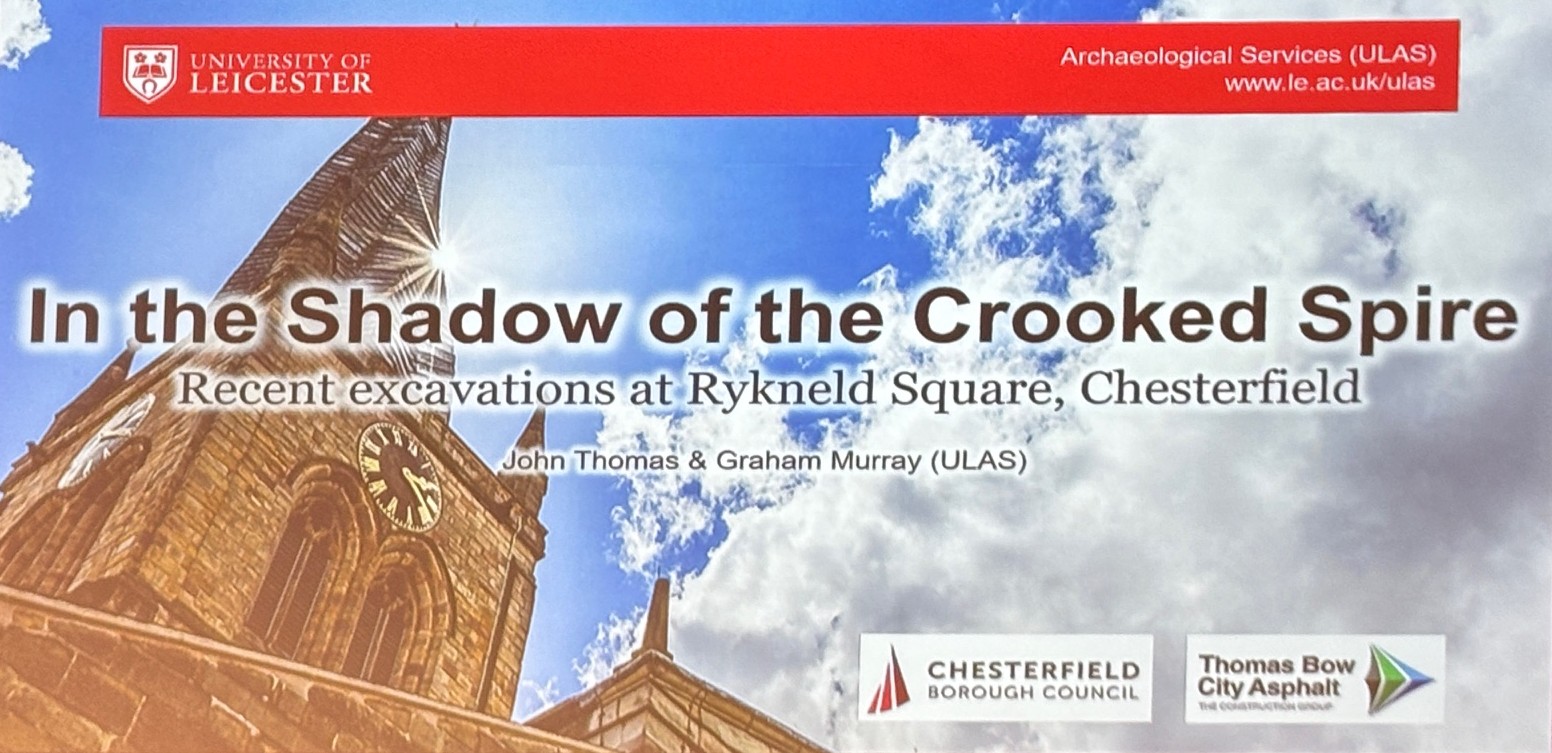
John started by giving some context to the excavation – the need for which was established when contractors involved in the ‘Revitalising the Heart of Chesterfield’ works discovered some human remains. Perhaps not surprisingly these were found in the site of the former graveyard. It was clear that archaeology on the site required further investigation – mainly in the area where the existing square, in front of what was the visitor information centre, is situated.
The work had comprised a ‘desk-top’ assessment, including investigation of mapping sources. These start from the George Senior survey of Chesterfield in 1637, onwards into the 20th century. During this time the site has had a varied history. In the 19th century a house fronting Burlington Street was demolished to create a new entrance to the church yard via a new ‘Alpine Gardens’ In the 20th century Church Way was driven though the gardens, eventually making a through vehicular communication between St Mary’s Gate and Burlington Street. Finally the visitor information centre came, with a slight altered road layout.
The actual excavations have found that the archaeology discovered matches with the Senior survey The presence of stone-built cottages on what became Church Alley, their backyard plot wall and part of the churchyard wall were uncovered. Some traces of Alms Houses were identified, with old trenches reopened alongside new excavations. The excavations are currently down to Medieval levels, with post and pit holes discovered, alongside 12th and 13th century pottery. No Roman or earlier remains have been found. It is not intended to go much deeper in these levels, as most of the archaeology found will be back filled and remain under the new square.
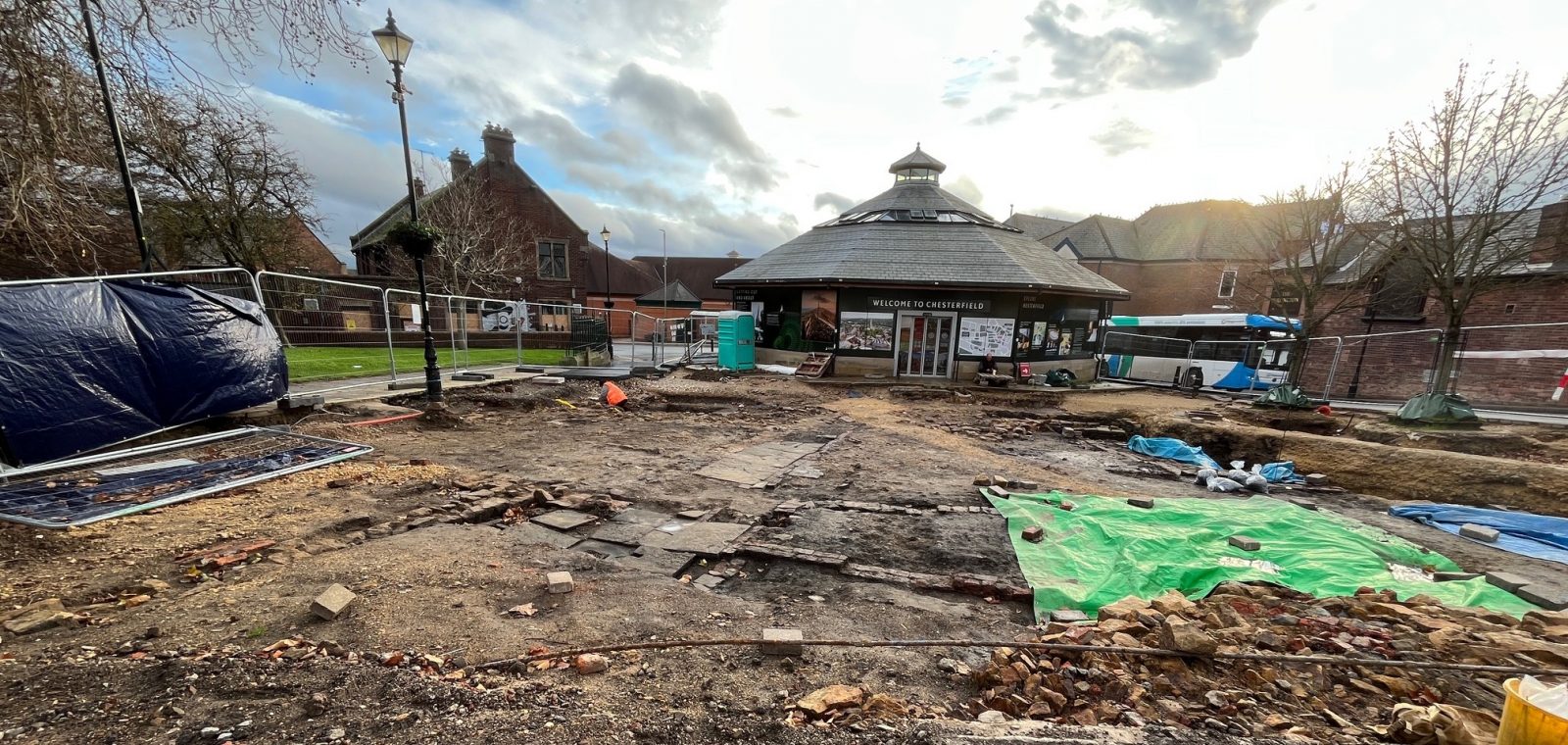
Leicester University will be on site for a few more weeks. It’s a worth a visit to look at the remains of the cottages and some internal pathways – all very close to the former surface of the square. But don’t expect anything spectacular!
The presentation also included a brief but useful summary of past archaeological excavations in the town centre. These included 1970s excavations nearby at the then surviving remnant of Alpine Gardens and, before that, Church Lane (basically the old Vicarage site). It was at the latter that Harry Lane first discovered the site of a Roman fort in Chesterfield.
There is still much to be discovered from archaeology in Chesterfield. Some this should be based around drawing together the already undertaken excavations – some which still remain unpublished. It is envisaged that this excavation will be published in due course.
The work has been undertaken in partnership with Chesterfield Borough Council and the contractors Thomas Bow City Asphalt.
If you would like to learn more about early Chesterfield head for our chronology of the town’s history.